
© HILLSIDE TERRACE 33
Scroll down

The Tradition of Hospitality
Fukuoka Geihinkan

Hospitality made possible
through traditional
Japanese skills

Elevating Traditional Craftsmanship into Art

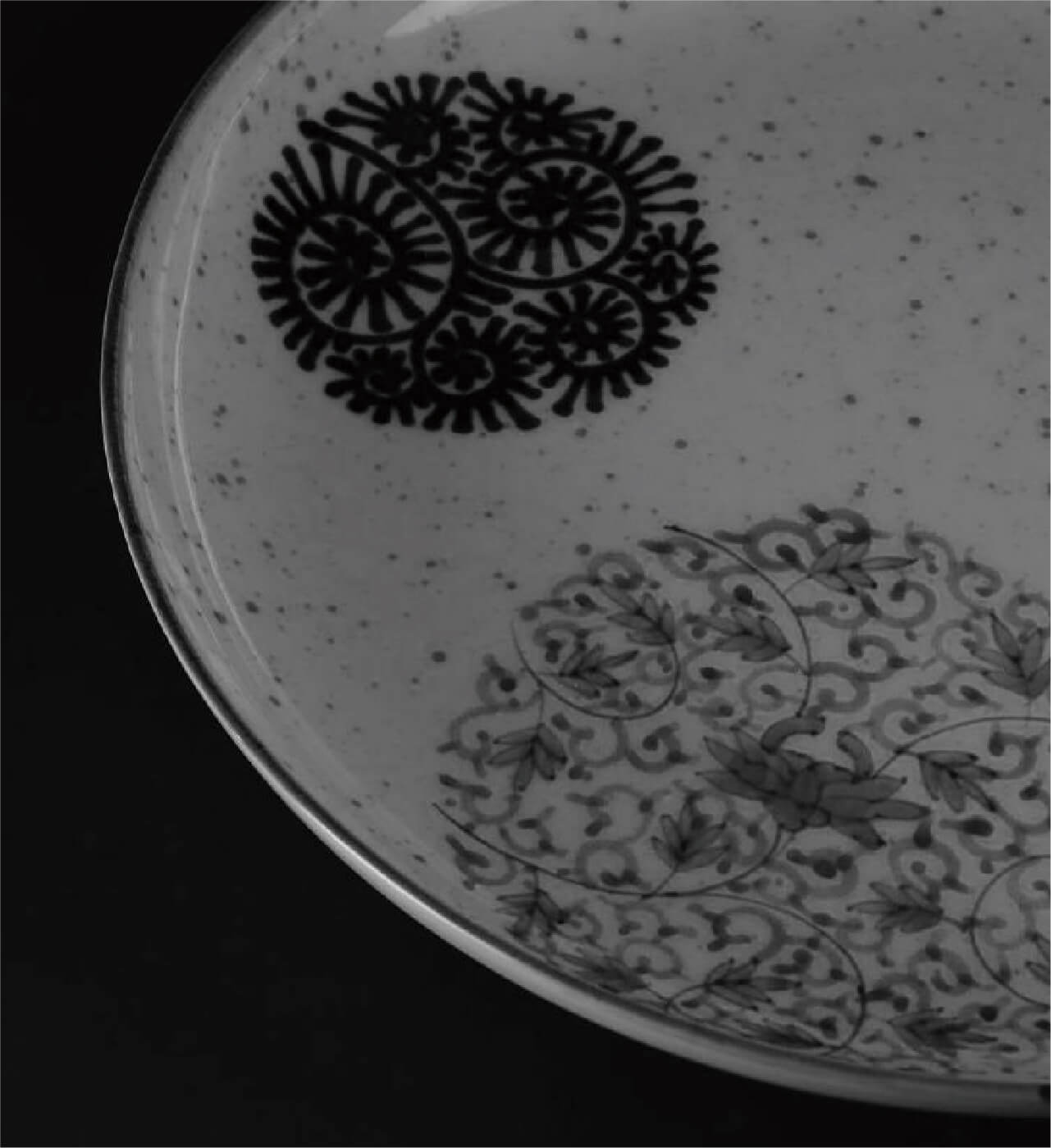
Fukuoka Geihinkan is both a residence and a guest house that inherits, showcases, and celebrates the refined skills of artisans as a form of art - Gei. Founded by a construction company with roots in plaster craftsmanship, Gei reinterprets and reconstructs the foundations of traditional Japanese architecture - its materials, techniques, and philosophy - in ways that resonate with the present day. Drawing inspiration from Kourokan, the ancient facility in Fukuoka that once served as a hub for cultural exchange with Eurasia, this architecture was born from the collaboration of local materials and skilled craftsmen and helped reinterpret the tradition for the future.
Mission

Creating
a New Tradition

Born from the question of how to carry tradition into the future, Fukuoka Geihinkan embodies a new vision of architecture - one that centers on exploration, inheritance, and development.Through these principles, it contributes to nurturing the next generation while revitalizing local culture and industry.

Architecture

The Exterior

Blending the Spirit of the Past into the Contemporary Landscape

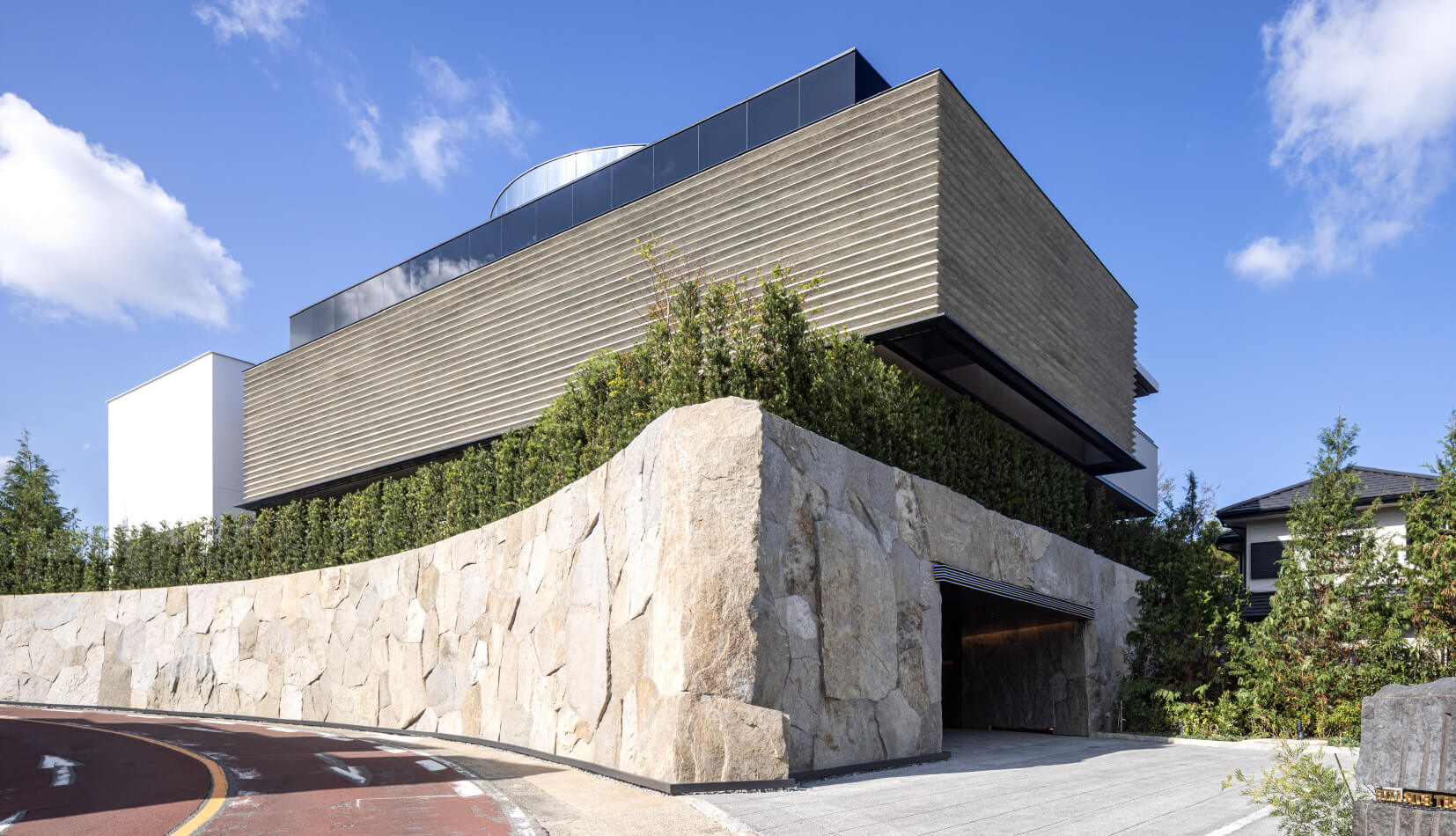
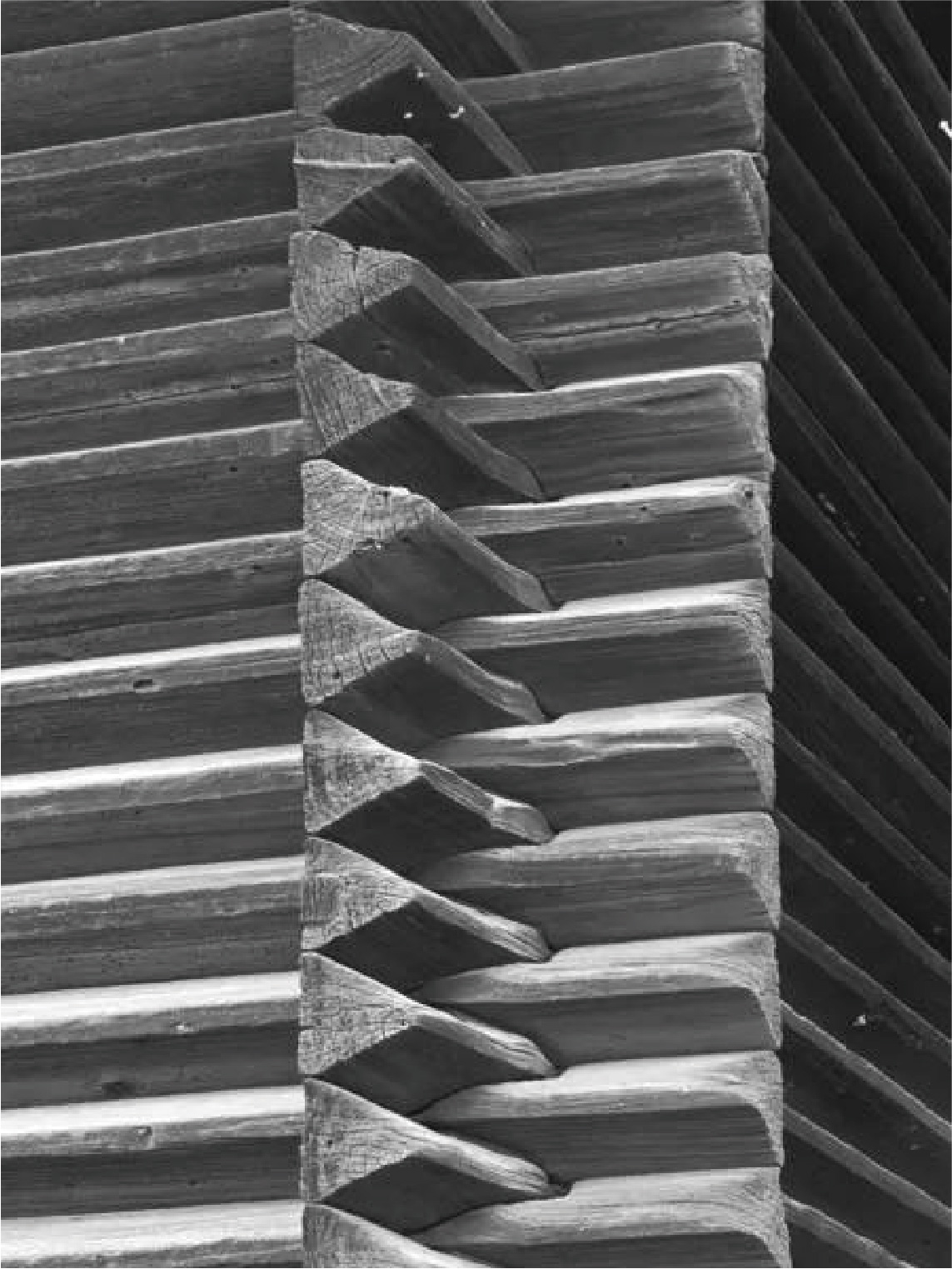
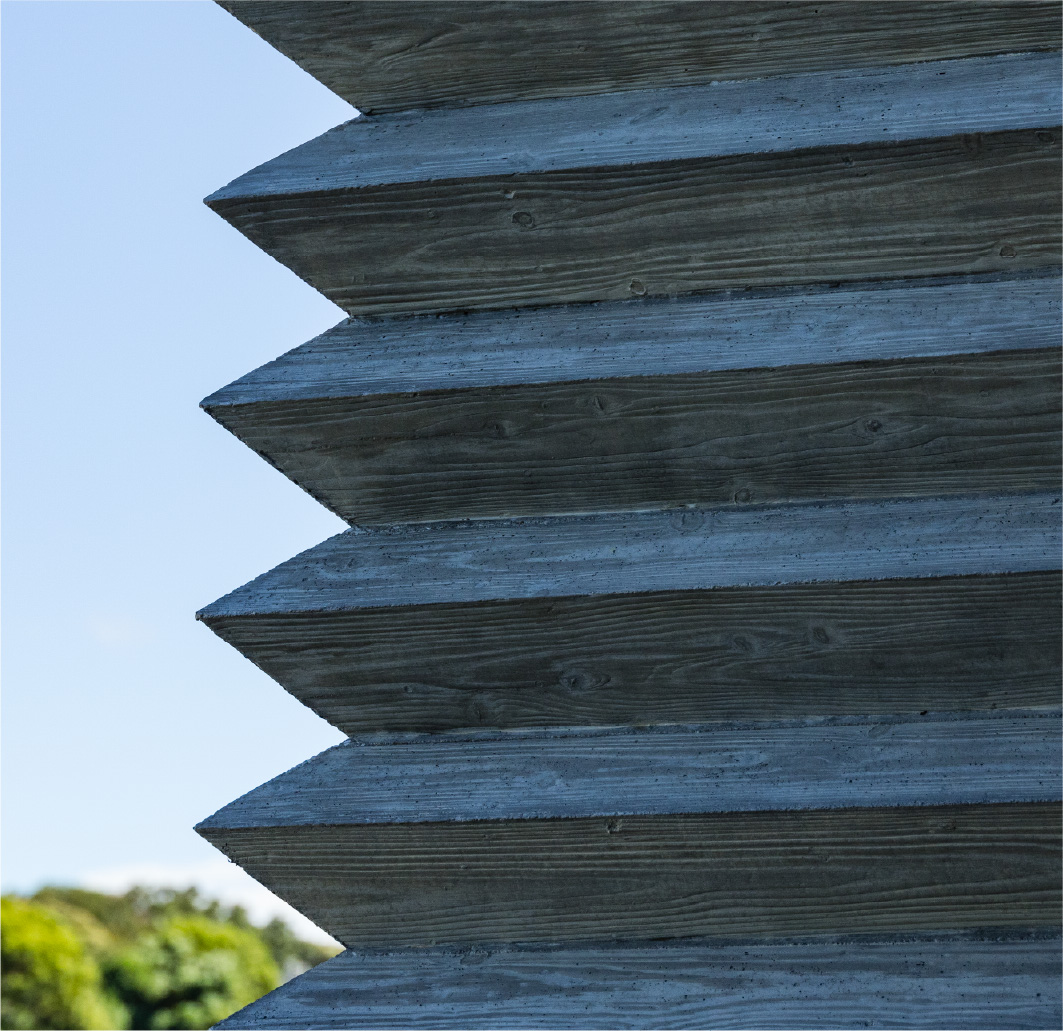
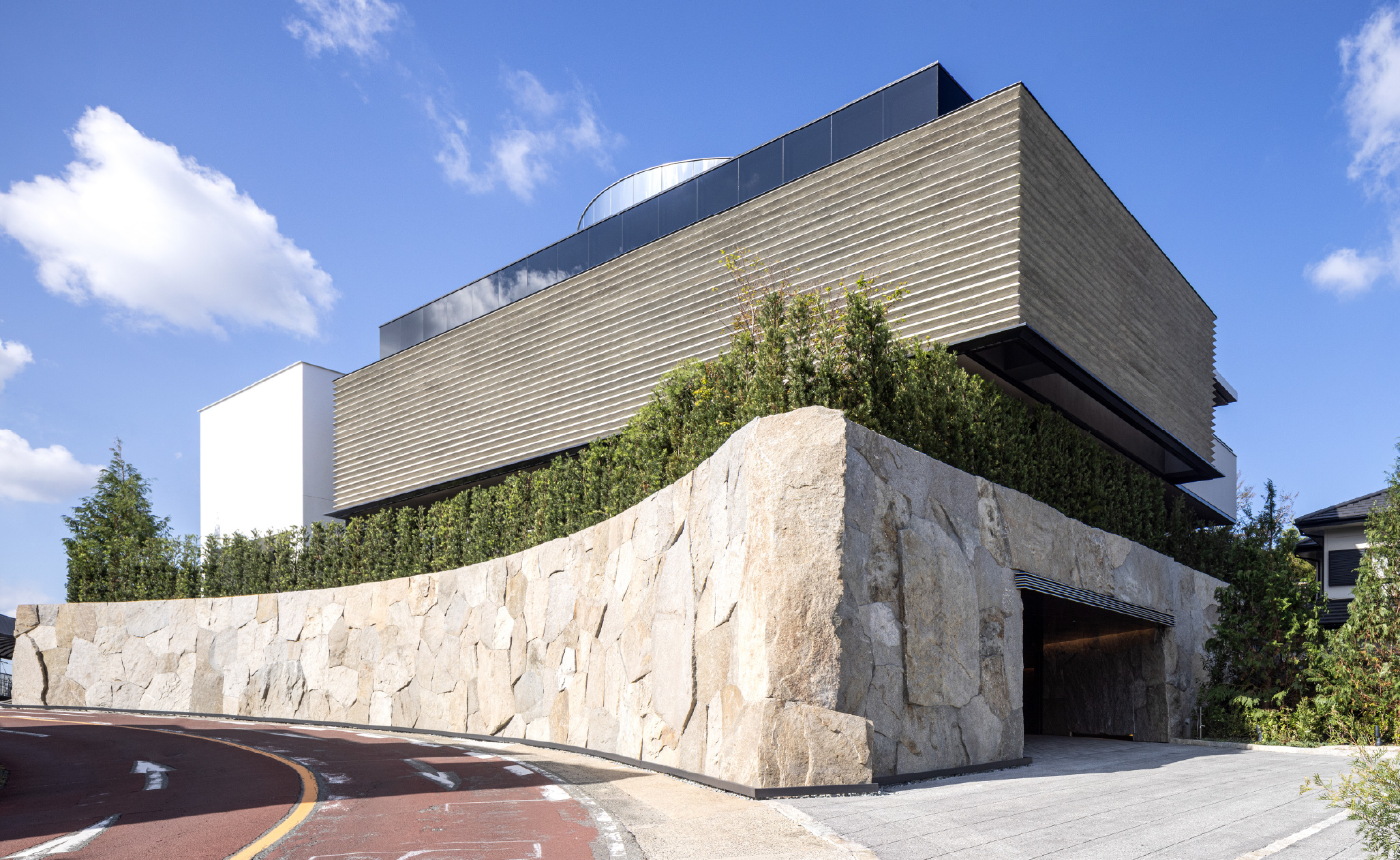
The curving stone wall, clad in the natural surface of Oshima stone from Ehime prefecture, follows the contour of the site. Built using the intricate aikata-zumi technique, it preserves the memory of the former residence once known as “the house with the great stone wall”, while blending harmoniously into the surrounding landscape. Above the retaining wall, the contrast between the exposed concrete finished with sugi (Japanese cedar) and volumes of white plaster reinterprets the essence of traditional Japanese architecture in a modern view. At night, the illuminated stonework of Ōshima stone further enhances its presence as a symbolic landmark for the community.

B1F

An Entrance Crafted
with Japanese Materials

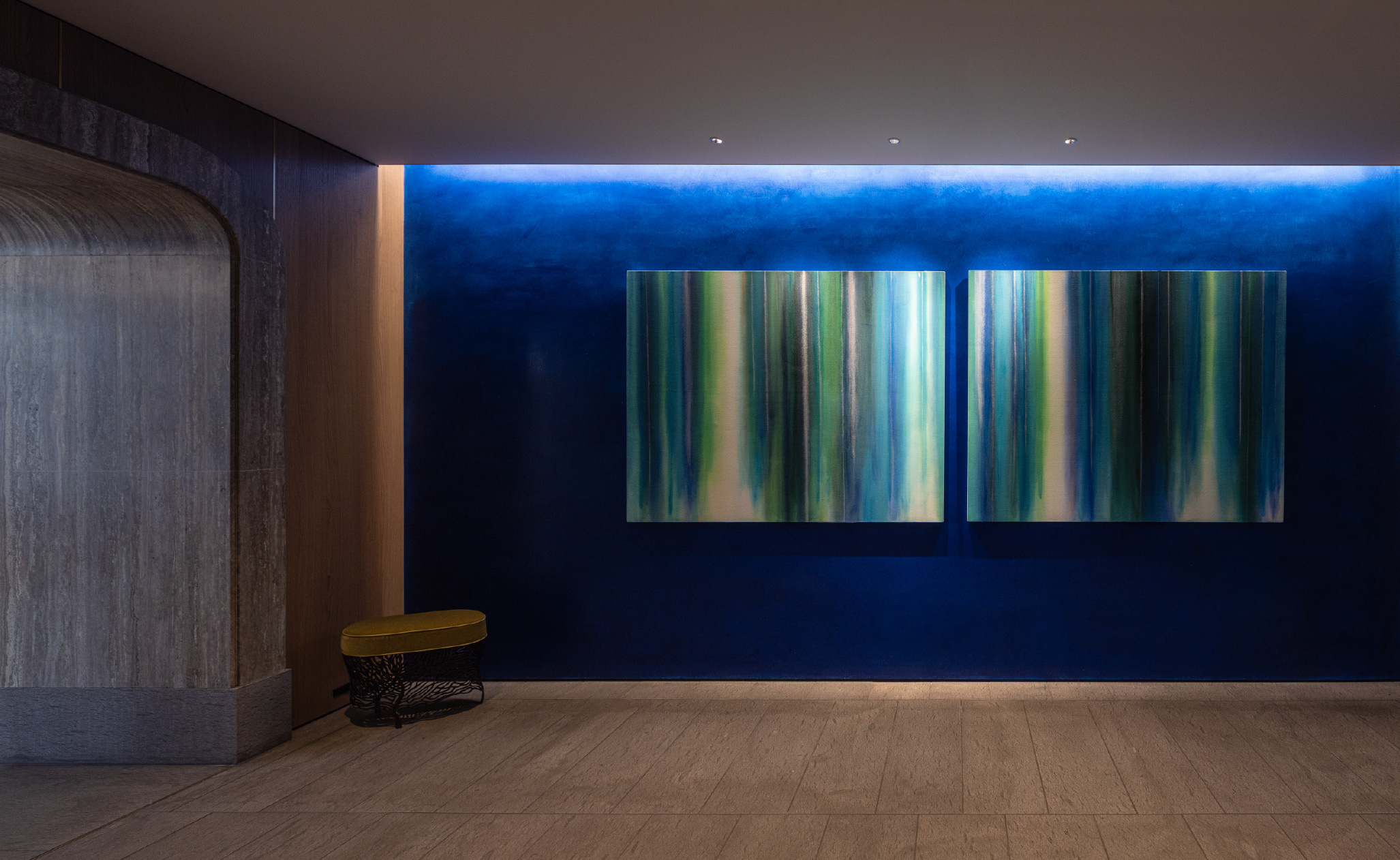
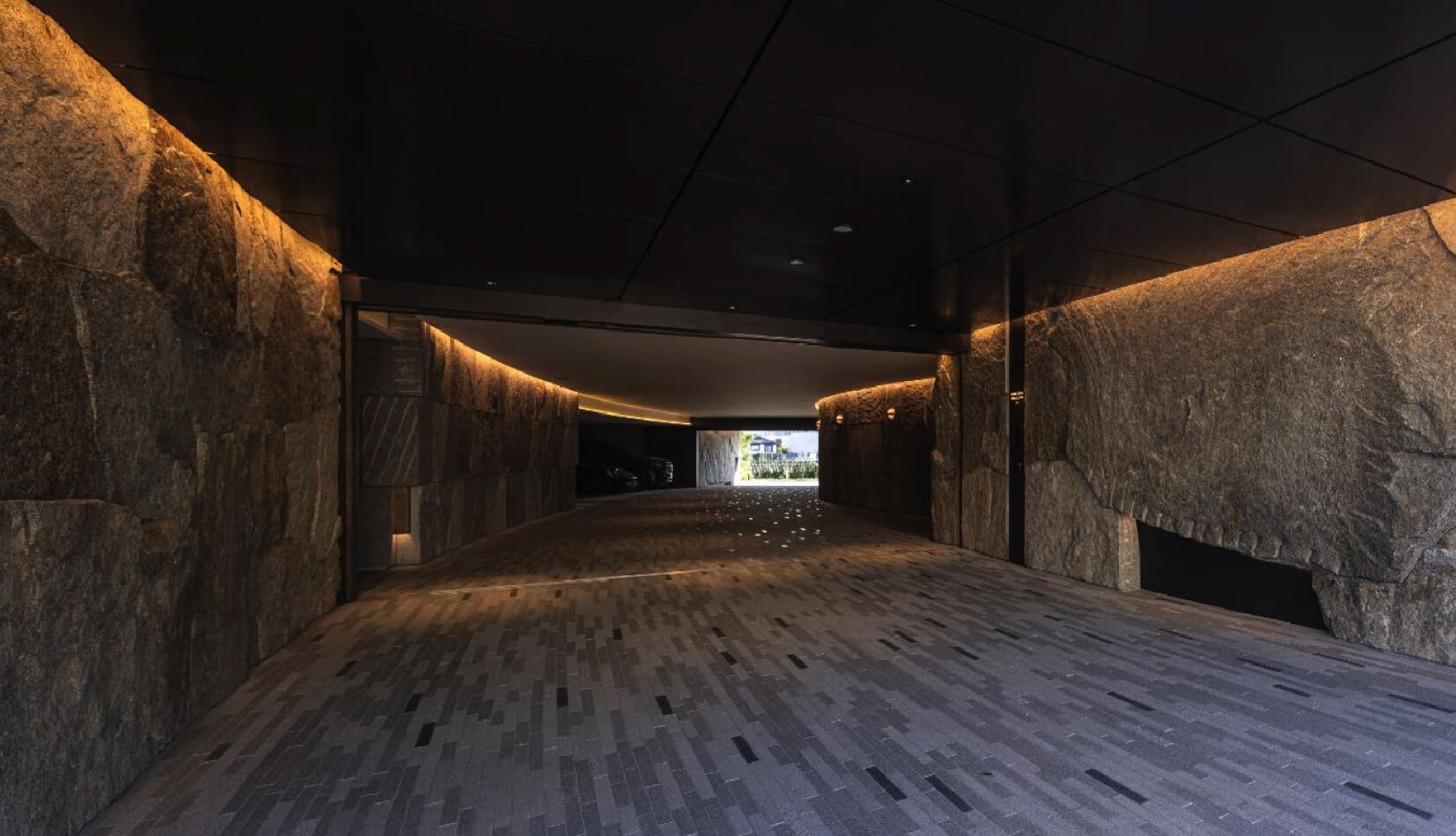
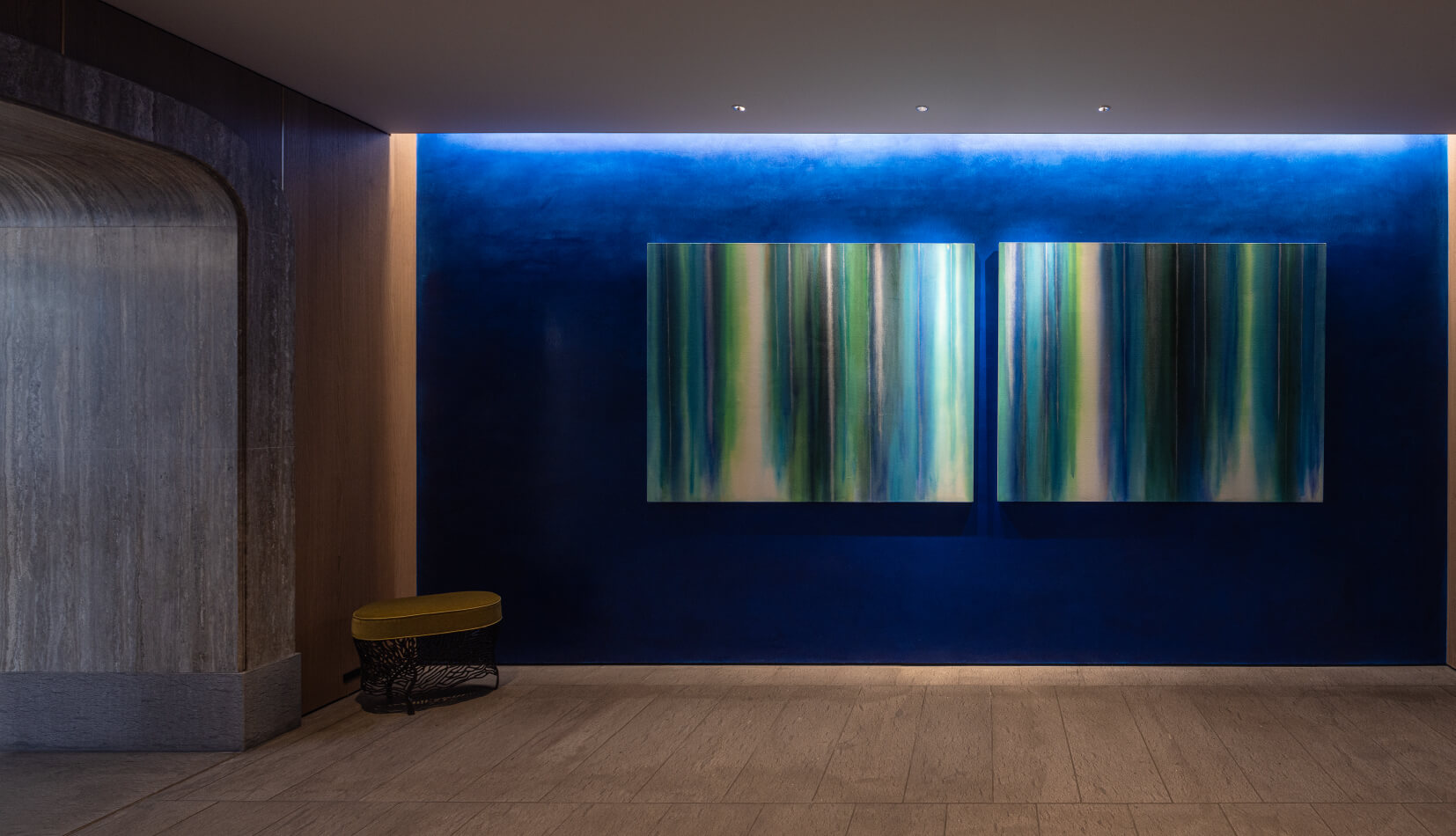
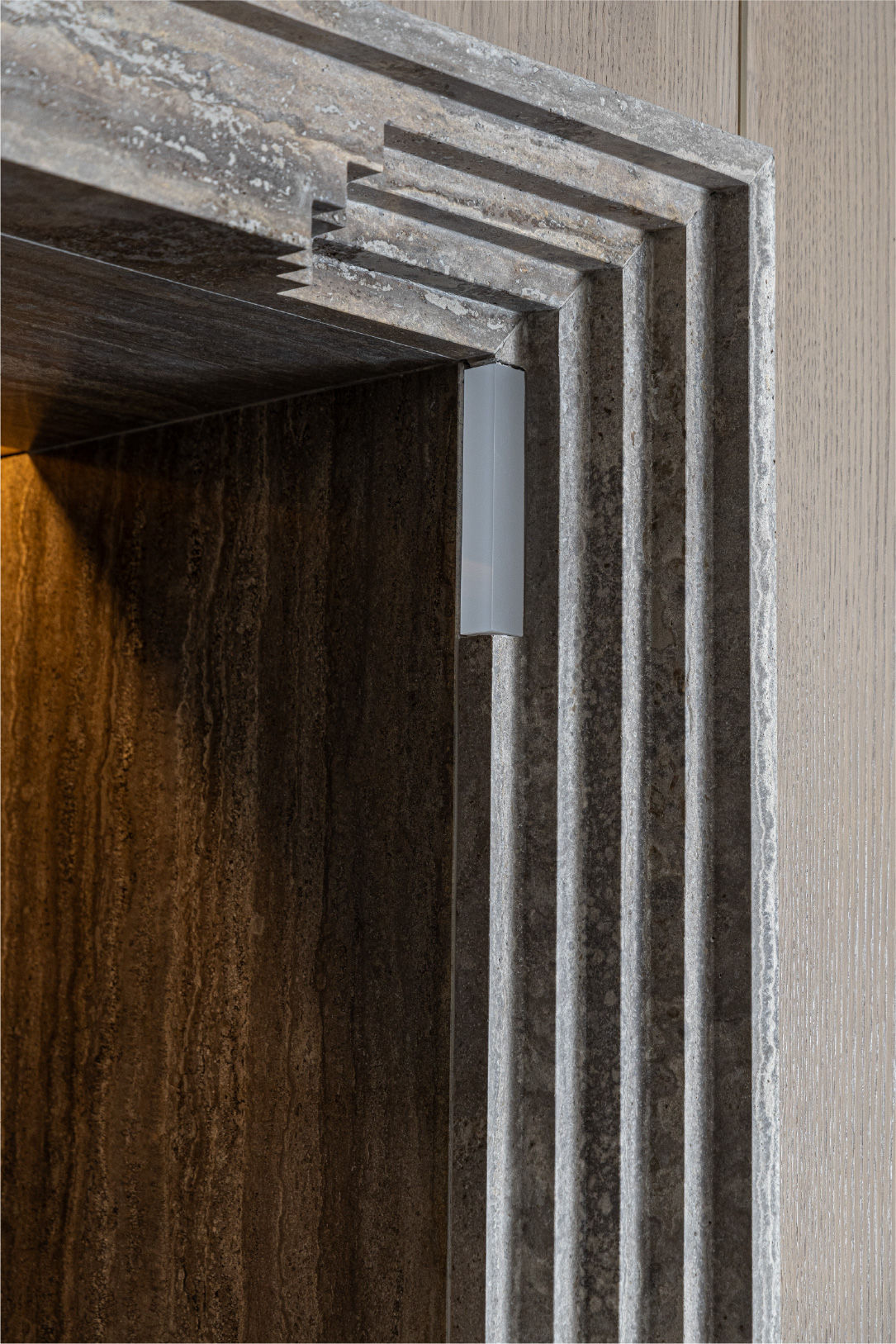
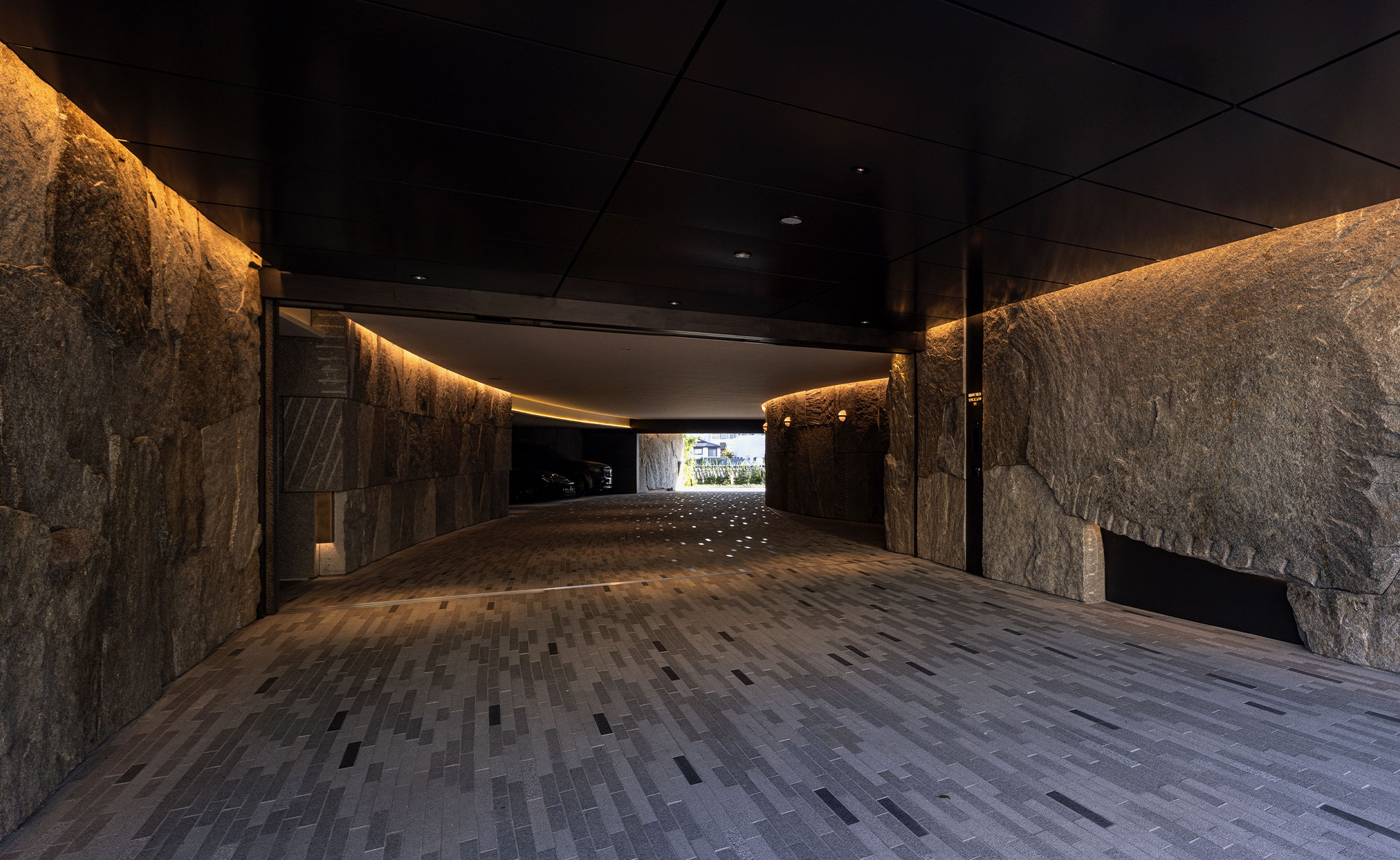
Although a private residence, the home also functions as a guest house, and the underground entrance has been designed to embody a spirit of hospitality. Visitors are welcomed by a massive Oshima stone monolith and a large cast aluminum gate that together create a dignified and memorable arrival experience. The driveway is defined by a gracefully curved wall of Oshima stone reused from the former residence. As this area also serves as the main entrance to the house, select wall surfaces are finished with wooden veneers. Soft indirect lighting is used to evoke a sense of warmth and atmosphere in the living spaces. The entrance hall is finished with carefully curated materials sourced from Fukuoka prefecture, throughout Kyushu region, and across Japan - each chosen selectivity to bestow a sense of rich cultural depth.

1F

A Public Space
with Depth and Complexity

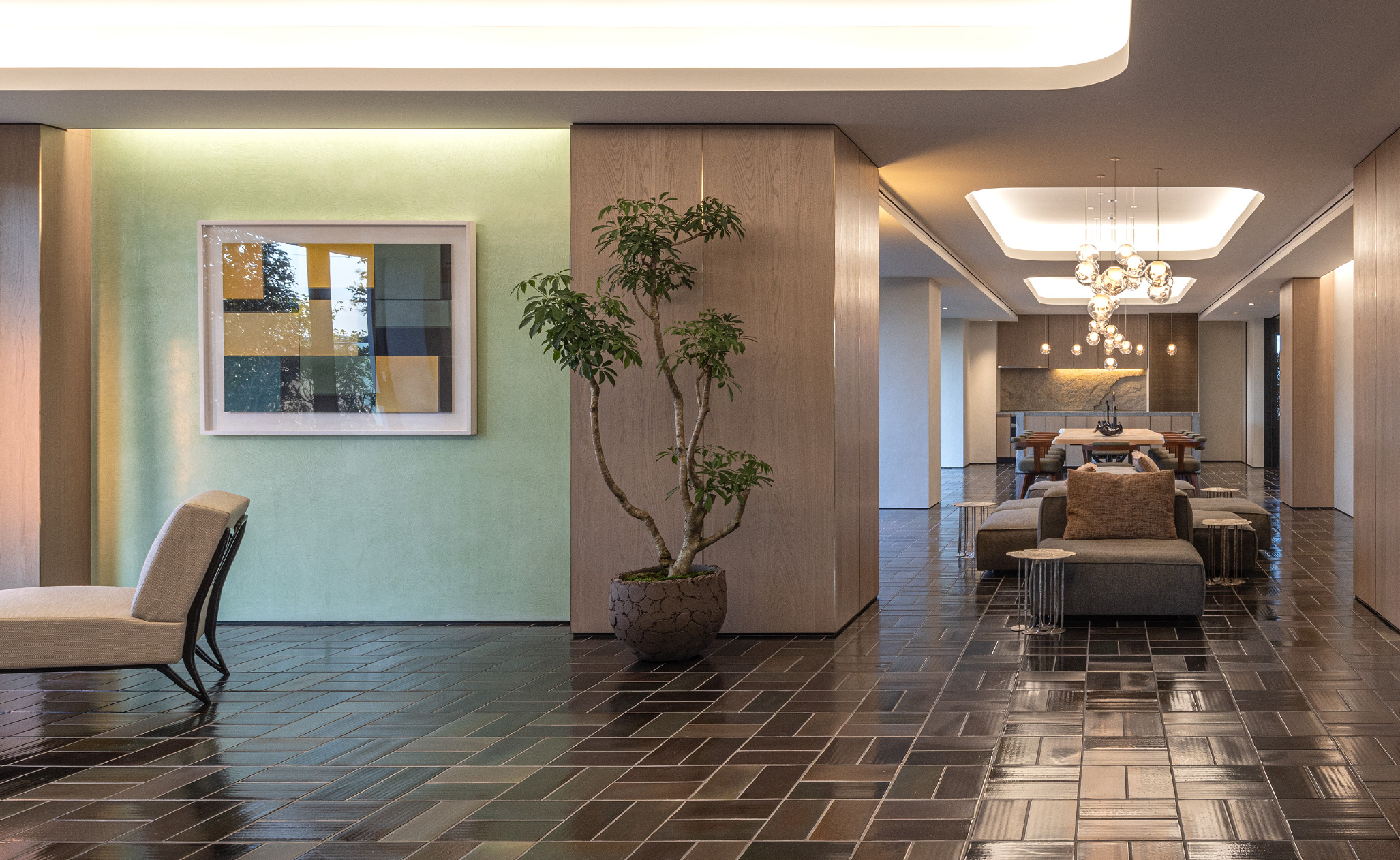
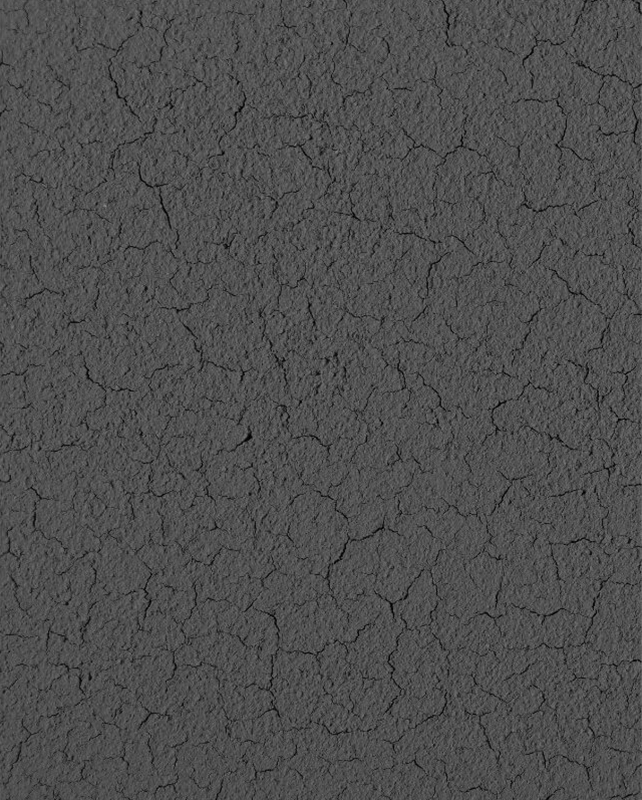
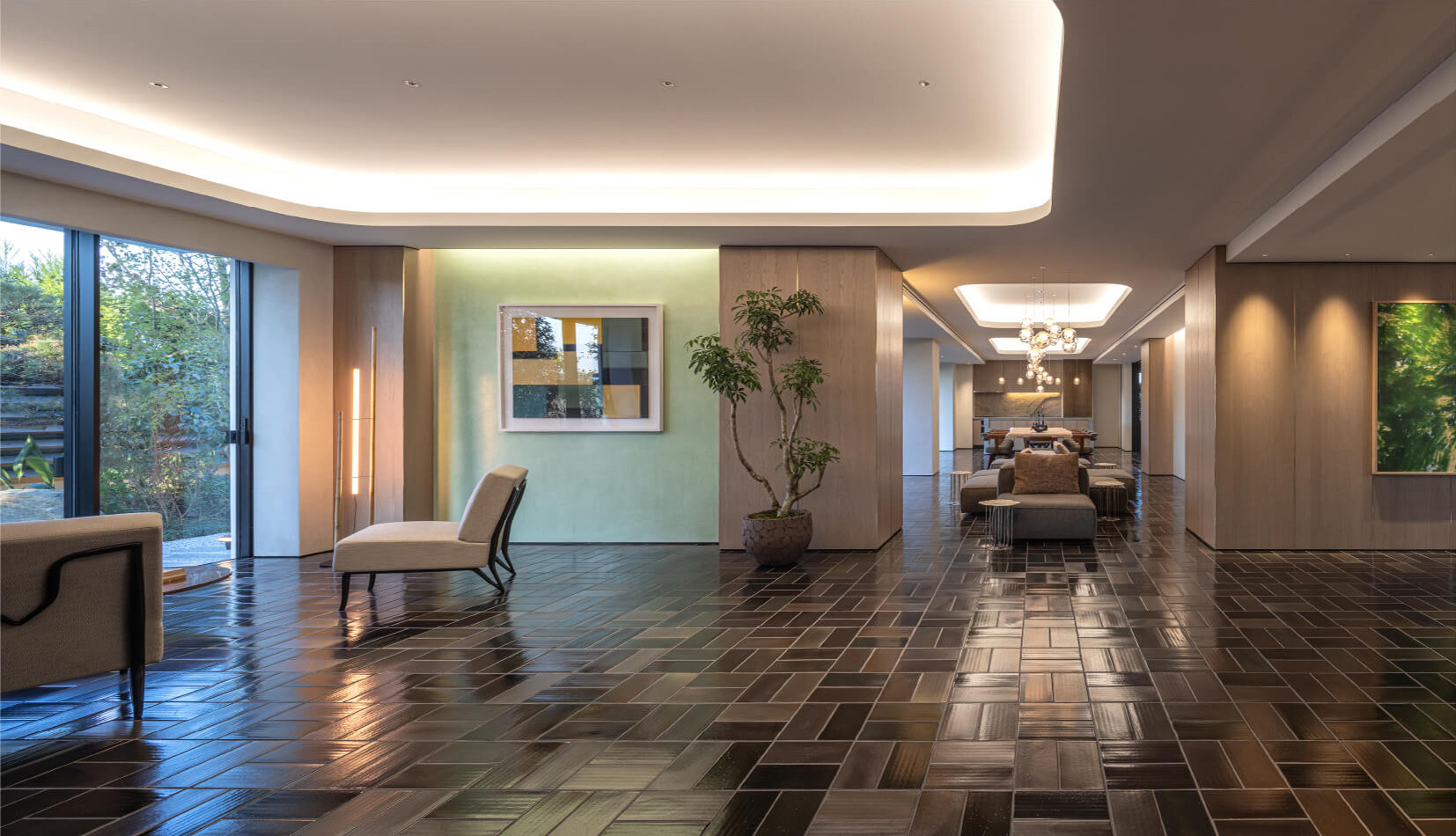
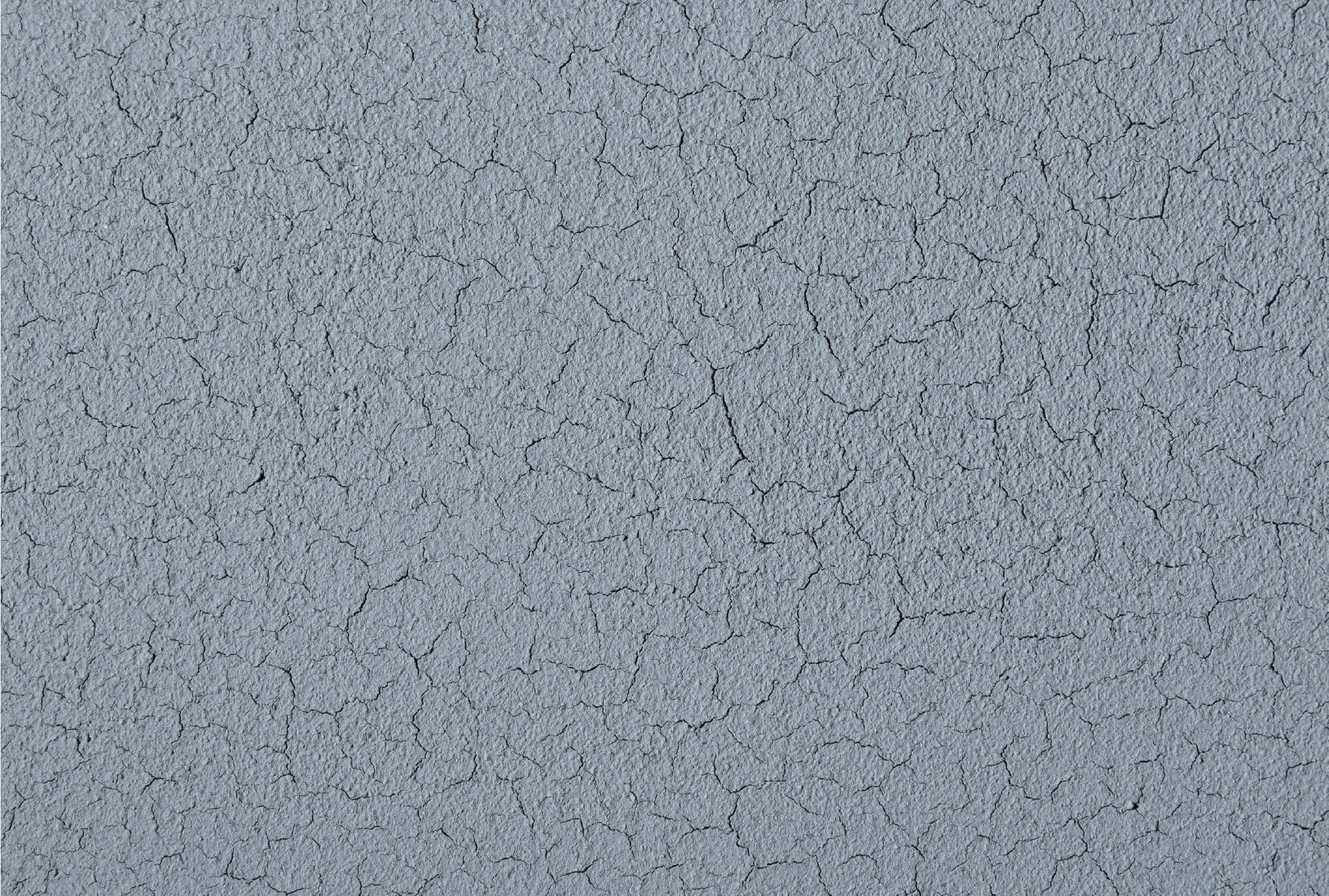
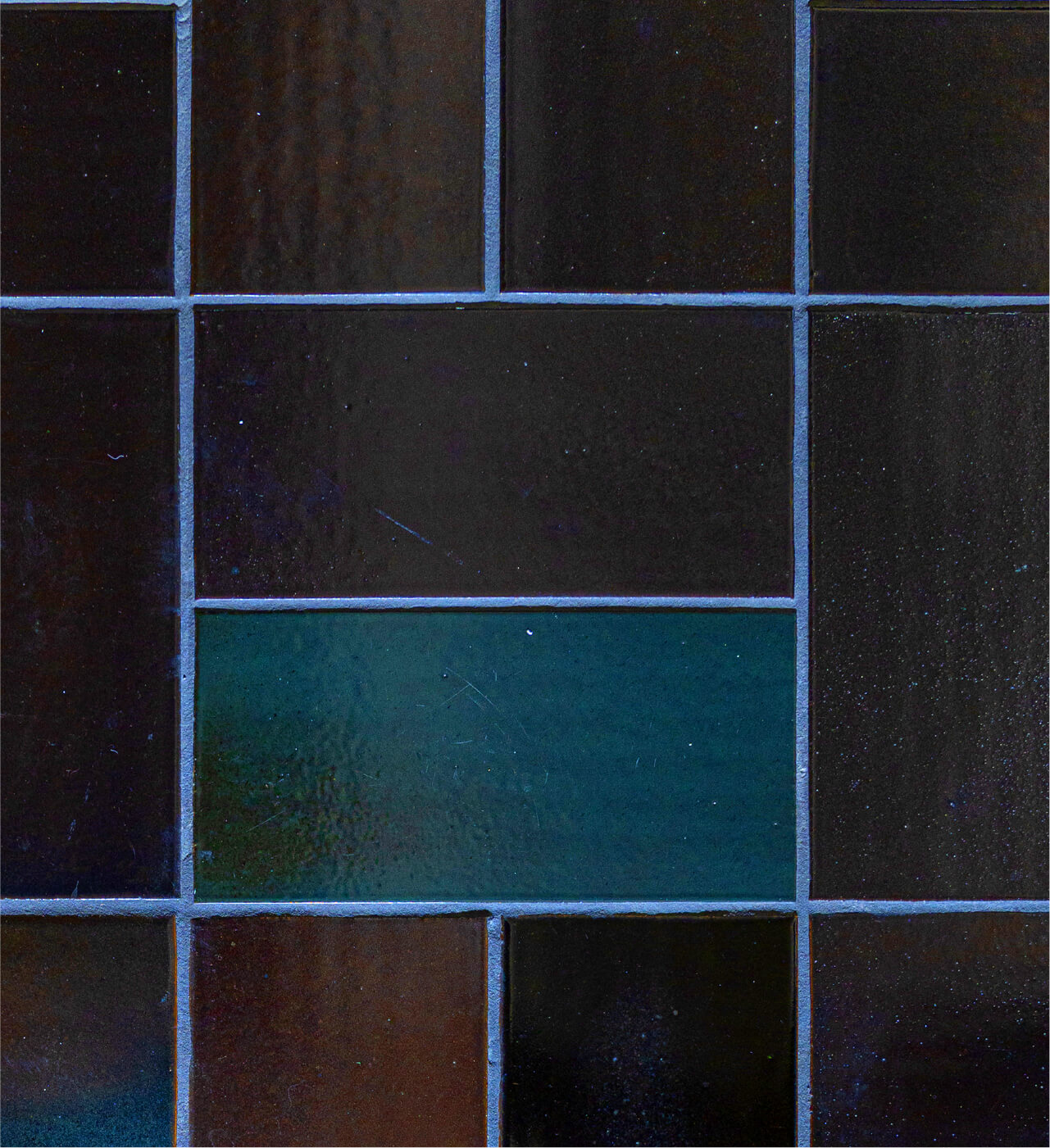
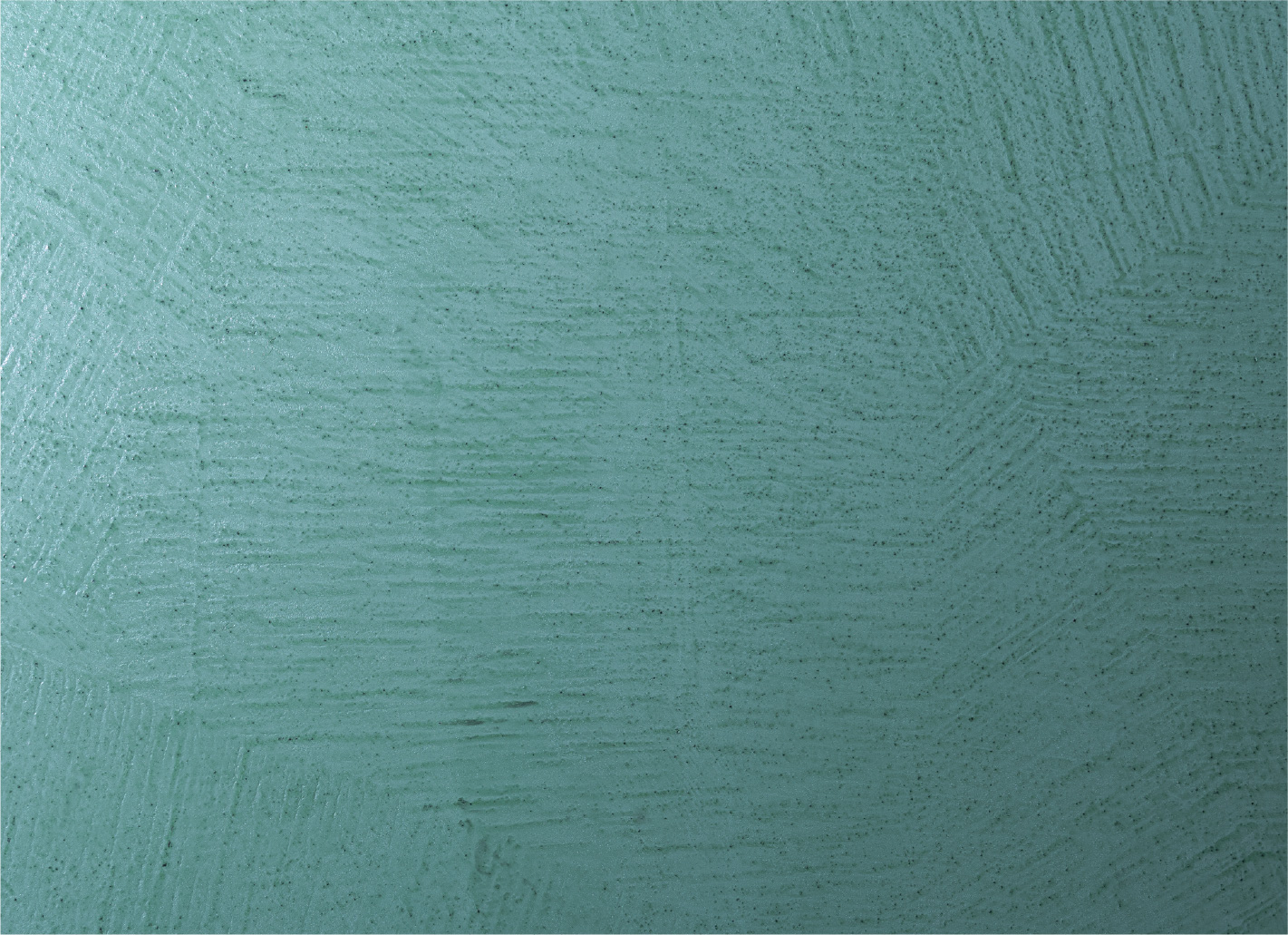
The public space consists of multiple focal points segmented areas, each serving different purposes within a consolidated environment. By incorporating carefully composed spatial relationships, select materials and furniture layout areas are defined without literal detachment. These layers of varying spatial qualities are overlaid to create a sense of depth and complexity. A seamless connection between interior and exterior is achieved through the continuous use of Atira porcelain tiles, enhancing both the spatial flow and openness of the entire environment. In the Japanese style room, the ceiling features a three dimensional finish with white plaster, while the tokonoma alcove wall is crafted in black plaster - a finish requiring significant artisanal competence.

2F

An Expansive Space
with Privacy and Openness

The third floor serves as the private residence and it is designed to encourage family interaction while maintaining a sense of privacy for each individual. At the heart of the home, an elevator hall framed by a marble gate forms the core, surrounded by the open and spacious dining and living areas which are arranged as shared family spaces. The living room, expansive in scale, is divided into two spaces through the placement of furniture and the stepped ceilings, allowing for a separation of atmospheres. The walls are composed of chestnut veneer panels with brass joints accents and polished plaster finishes, creating a warm yet refined atmosphere. To protect the interior from outside views and the noise of the adjacent road, a perimeter wall was introduced. This wall ensures privacy by acting as a buffer zone while still allowing room for ample natural light to come in, maintaining a comfortable connection between indoor and outdoor enviornments.